In partnership with JPMorganChase and the Evaluation team, MSFCP defined a series of learning outcomes and metrics to evaluate and ensure that participation in MSFCP leads to improved academic success, persistence, credential completion and lifelong financial health
FINANCIAL HEALTH METRIC
TARGET
Create a personal budget
80%
Achieve a financial Goal
80%
Average increase in savings
$350
Average decrease in debt
$350
Participants who increase credit score
20%
Increase credit score
20 points
Complete and pass a credit course
75%
Complete noncredit course modules
75%
PERSISTENCE & RETENTION
A key marker of success for the MSFCP program is the strong persistence rates – students continuing in their postsecondary studies or completing a certificate or degree.
82.4% of students enrolled in spring 2025 either completed their programs or re-enrolled the next fall
among four-year institutions, 90% of spring 2025 students completed a credential or returned the following fall
for community colleges, 74% of spring 2025 students either completed a credential or returned to school
85% of first-time, full-time (FTFT) completed a credential or returned to school in fall 2025
FINANCIAL CONFIDENCE
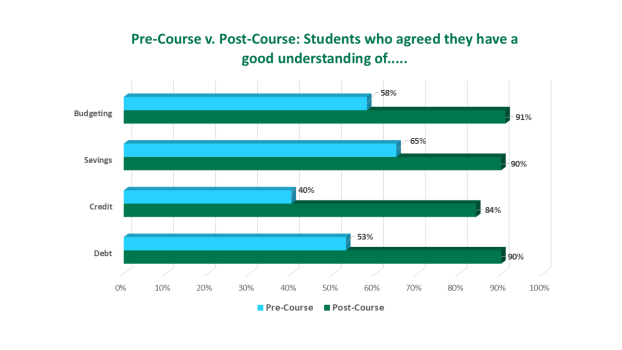
Pre- and post-participation surveys track and assess students’ financial knowledge and capability
evaluates behaviors, attitudes and perceptions regarding students’ own financial wellness
measures knowledge of, as well as confidence levels with financial health metrics